/knowledge

Western Union vs. MoneyGram: How They Compare and a Better Way
Western Union and MoneyGram are two prominent payment rails, each offering unique advantages. Western Union excels in global reach and extensive agent network, while MoneyGram is known for its competitive pricing and faster transaction times. Understanding these differences can help optimize your payment strategy.
Western Union vs. MoneyGram: How They Compare and a Better Way


PayPal vs. Cash App: How They Compare and a Better Way
PayPal and Cash App offer distinct advantages for digital transactions. PayPal excels in international payments with its extensive global reach, while Cash App stands out for its seamless integration with cryptocurrency trading. Understanding these differences can help optimize your payment strategy.
PayPal vs. Cash App: How They Compare and a Better Way

ACH vs. SWIFT: How They Compare and a Better Way
ACH and SWIFT are two distinct payment systems used globally. ACH is typically used for domestic transactions within the United States, offering lower costs and faster processing times. In contrast, SWIFT facilitates international payments, providing a secure and standardized method for cross-border transactions.
ACH vs. SWIFT: How They Compare and a Better Way

NEFT vs. RTGS: How They Compare and a Better Way
Understanding the differences between NEFT and RTGS is essential for optimizing payment strategies. While NEFT processes transactions in batches, RTGS offers real-time settlement. This distinction impacts transaction speed and suitability for various financial operations, making it vital to choose the right system for your needs.
NEFT vs. RTGS: How They Compare and a Better Way
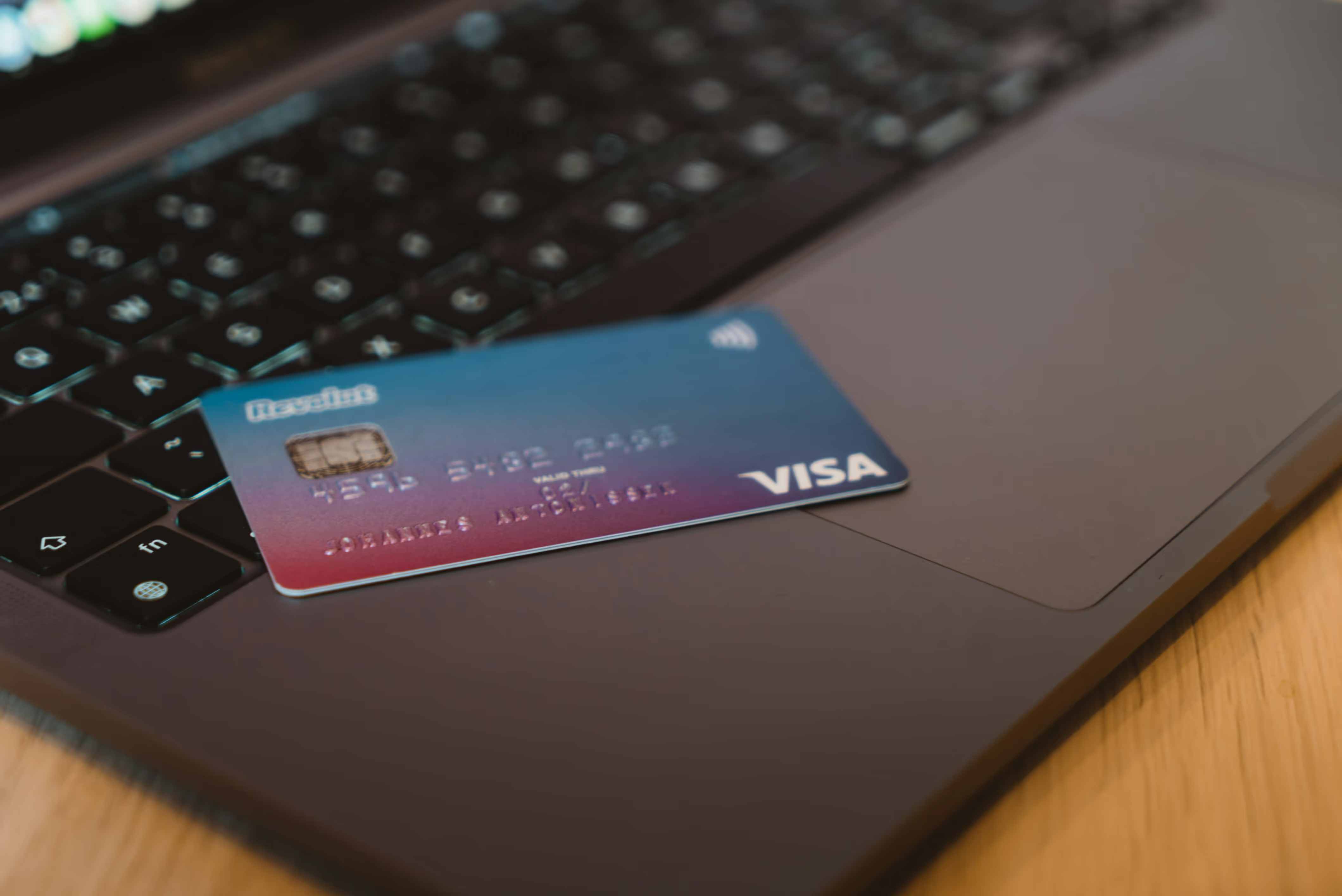
Zelle vs. Cash App: How They Compare and a Better Way
Zelle and Cash App offer distinct advantages for digital payments. Zelle excels in instant bank-to-bank transfers, while Cash App provides a versatile platform with features like Bitcoin trading and investing. Understanding these differences can help optimize your payment strategy.
Zelle vs. Cash App: How They Compare and a Better Way

Zelle vs. PayPal: How They Compare and a Better Way
When comparing Zelle and PayPal, it's essential to note their distinct operational models. Zelle facilitates instant bank-to-bank transfers, while PayPal offers a broader range of services, including international payments and merchant solutions. Understanding these differences can guide strategic decisions in payment processing.
Zelle vs. PayPal: How They Compare and a Better Way
ACH vs. EFT: How They Compare and a Better Way
ACH and EFT are both essential payment rails in the financial ecosystem, yet they differ in processing times and transaction types. ACH typically handles batch processing, making it slower but ideal for scheduled payments, while EFT offers real-time transactions, catering to immediate fund transfers.
ACH vs. EFT: How They Compare and a Better Way

Unlocking the RWA Crypto Boom: Real-World Assets on the Blockchain
RWA crypto's market cap has hit $35.9 billion and market cap experts believe the value will cross $50 billion by year-end and reach $10 trillion by 2030. Traditional financial giants like BlackRock and Goldman Sachs now integrate real world assets in their operations. The tokenization of physical assets stands as one of blockchain's most important opportunities. Centrifuge has delivered groundbreaking RWA tokenization solutions since 2017. Emerging blockchain infrastructure providers like Lightspark are also helping scale this ecosystem by powering fast, secure, and low-cost payments across borders.
Unlocking the RWA Crypto Boom: Real-World Assets on the Blockchain
Bitcoin Mining Pools in 2026: How They Work & Top Pools by Hashrate - Lightspark
Bitcoin mining pools have become a pivotal component of the cryptocurrency ecosystem. These pools are groups of miners who combine their computational resources (hash power) to increase their chances of mining new blocks and earning rewards. This collaborative approach emerged as a response to the growing complexity and competitive nature of solo mining.
Bitcoin Mining Pools in 2026: How They Work & Top Pools by Hashrate - Lightspark

Demystifying Bitcoin: 5 Most Common Misunderstandings
Since the creation of its genesis block in 2009, Bitcoin has stood at the forefront of the cryptocurrency revolution, captivating both enthusiasts and skeptics. As a decentralized digital currency powered by blockchain technology, it challenges conventional financial paradigms by offering a transparent, secure, and borderless alternative to traditional systems.
Demystifying Bitcoin: 5 Most Common Misunderstandings

Why Businesses Should Embrace Bitcoin Payments
The financial landscape is experiencing a transformative shift as cryptocurrencies, particularly Bitcoin, gain mainstream acceptance. What once was considered a niche digital asset is now a legitimate medium of exchange, influencing how businesses operate globally. For companies, adapting to these changes isn't just about staying current with trends—it's about seizing new opportunities for growth, efficiency, and competitive advantage. Embracing Bitcoin payments can unlock numerous benefits that traditional payment methods may not offer, positioning businesses at the forefront of innovation.
Why Businesses Should Embrace Bitcoin Payments

What is a Lightning Network Channel?
The Lightning Network is an innovative layer-2 payment protocol built atop the Bitcoin blockchain, designed to tackle the inherent scalability challenges that have limited Bitcoin's widespread adoption. By enabling fast, secure, and low-cost transactions off-chain, it allows parties to exchange funds without recording every transaction on the blockchain. This advancement paves the way for Bitcoin to be used in everyday transactions, significantly expanding its utility in global payments.
What is a Lightning Network Channel?

Who Owns Bitcoin?
The short answer: no one owns Bitcoin. People and organizations can own individual Bitcoin, and people and companies can own software that makes it easier to buy, store, or transfer Bitcoin, but no one owns the Bitcoin payment network itself. Bitcoin is entirely independent of any one person or organization.
Who Owns Bitcoin?

What is Bitcoin?
Bitcoin is a decentralized digital currency introduced in 2009 by the pseudonymous Satoshi Nakamoto. Operating without a central authority, Bitcoin enables peer-to-peer transactions on a global scale through blockchain technology. While the true identity of Satoshi Nakamoto remains unknown, Bitcoin has become a revolutionary force in the financial world, influencing the development of thousands of cryptocurrencies and transforming the way we think about money and technology.
What is Bitcoin?
How To Send and Receive Bitcoin Payments
Bitcoin is a decentralized, peer-to-peer digital currency that enables instant payments to anyone, anywhere in the world. Unlike traditional currencies, Bitcoin operates without a central authority or banks. Instead, it uses cryptography to secure transactions and a public ledger called the blockchain to record them.
How To Send and Receive Bitcoin Payments
