Lightspark forpayroll & EOR
Run global payroll from one balance. Fund once; every person is paid on their local rail, in their currency.
Lightspark API
(0, 0, 0)
The problem
Global payroll is a chain of vendors. Payday shouldn’t be.
Paying a global team today means a payroll provider here, an FX desk there, banking partners in every region, and a spreadsheet holding it together. Every border adds a vendor, a fee, a settlement delay, and another place for payday to go wrong.
The people being paid feel it most: wire fees taken out of salaries, rates that moved between approval and arrival, and money that lands days late. And the operation never simplifies. Every new hire in a new country re-runs the same procurement: find a provider, negotiate the corridor, open the account, and add one more line to the reconciliation sheet.
How it works
One balance funds the run. Lightspark does the rest.
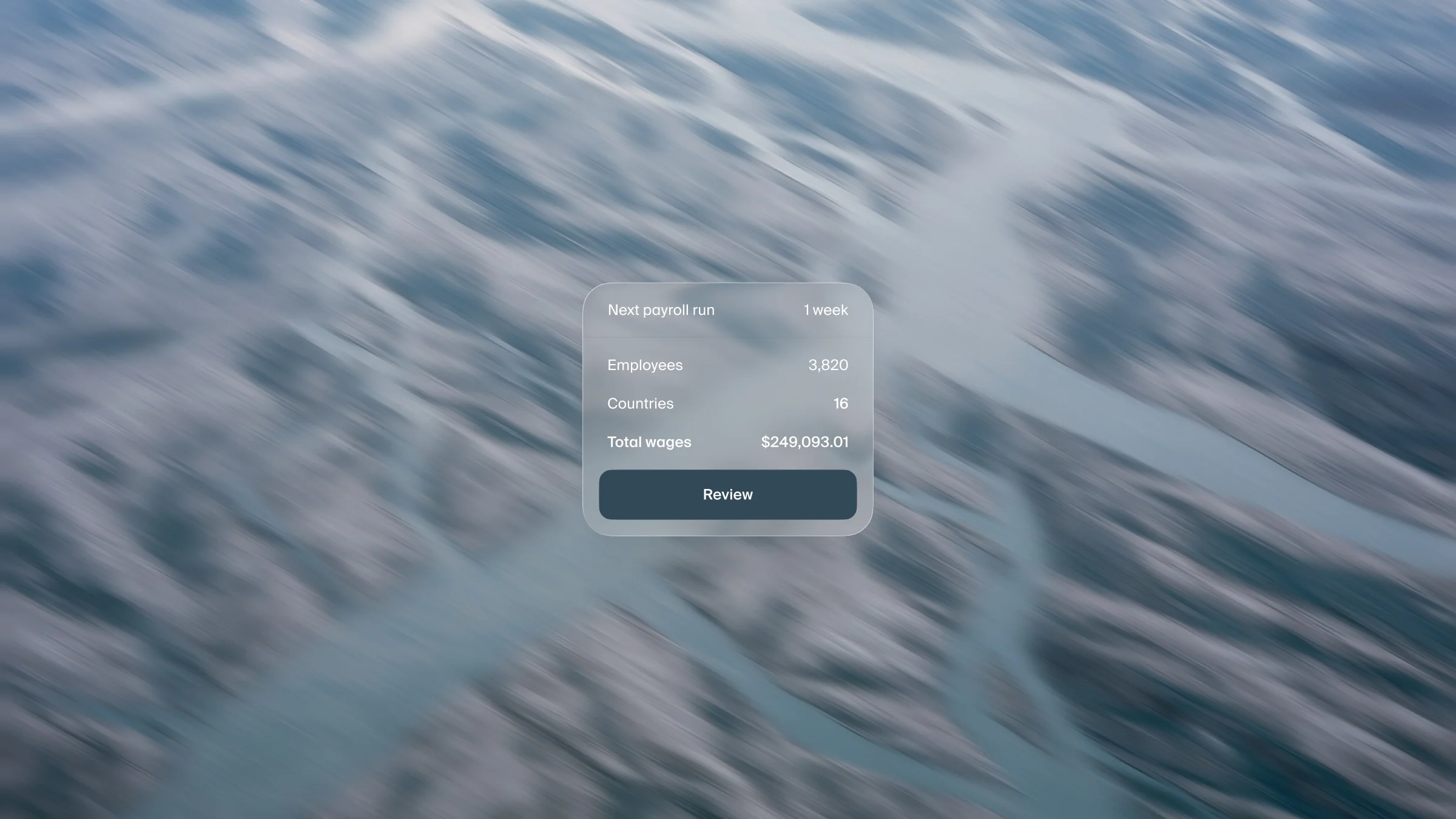
You already hold the roster: identities verified, banking details on file. Create each person as a recipient over the API with the data you have; Lightspark runs sanctions screening behind the scenes, and hosted flows exist for anyone whose details you’d rather not collect yourself. From there, payday is one funding event. Send a single transfer via ACH, wire, SEPA, PIX, or stablecoins, prefunded ahead of time or attached to the run itself so it executes the moment funds arrive.

 MXN
MXN
 INR
INR
 BRL
BRL
 GBP
GBP
 PHP
PHP
 NGN
NGN
 THB
THB
 DKK
DKK
 SGD
SGD
 MYR
MYR
 EUR
EUR
 AED
AEDEach payment gets a quote with the exchange rate locked and every fee visible before anything moves. Lock the sending side to fix your payroll cost, or the receiving side so every person gets the exact amount their contract says. If a run stalls and a quote expires, it recreates instantly at a fresh rate, so nothing ever executes on numbers you haven’t seen.
Then the run fans out: PIX in Brazil, UPI in India, SEPA in Europe. Each person is paid on their local rail, in their own currency, across 65+ countries. A webhook fires as each payment settles, so reconciliation is a query instead of a spreadsheet, and the run closes against statuses rather than guesswork.
Capabilities
Exact amounts in 65+ countries. On time, on local rails.
Pay people on the rails they already bank on, for exactly the amount the contract says.
Send to bank accounts, wallets, and mobile money providers in 65+ countries, settled in local currency.
- Austria
- Bangladesh
- Belgium
- Benin
- Brazil
- Bulgaria
- Cameroon
- China
- Colombia
- Croatia
- Cyprus
- Czech Republic
- Denmark
- Dominican Republic
- Egypt
- El Salvador
- Estonia
- Finland
- France
- Germany
- Ghana
- Greece
- Guatemala
- Haiti
- Honduras
- Hong Kong
- Hungary
- Iceland
- India
- Indonesia
- Ireland
- Israel
- Italy
- Ivory Coast
- Kenya
- Latvia
- Liechtenstein
- Lithuania
- Luxembourg
- Malawi
- Malaysia
- Malta
- Mexico
- Morocco
- Netherlands
- Nigeria
- Norway
- Pakistan
- Philippines
- Poland
- Portugal
- Romania
- Rwanda
- Senegal
- Singapore
- Slovakia
- Slovenia
- South Africa
- Spain
- Sweden
- Switzerland
- Tanzania
- Thailand
- Uganda
- United Arab Emirates
- United Kingdom
- United States
- Vietnam
- Zambia





































































Lightspark auto-routes each payment to the optimal rail for the currency, country, and amount. Instant where the rail supports it.
Lock the receiving amount so people are paid exactly what their contract says; the API calculates the sending side. Quotes hold the rate for 1 to 15 minutes depending on corridor.
Fund from held balances or with just-in-time payment instructions. Balances credit the moment funds arrive.
Identity checks, business verification, sanctions screening, risk review, and the requirements attached to each supported corridor.
Quote, execute, webhook. Every payment reports status through signed webhooks, so each run reconciles itself.
Integration
A payday is two calls per person.
The objects are the ones your team expects: customers, accounts, quotes, transactions, and webhooks. Quote each salary with the receiving side locked, execute, and listen for settlement. The sandbox funds instantly, so a full run can be rehearsed before production money moves.
Get started
Run the next payroll on Lightspark.
Start with one API, a sandbox, and the objects you already know: customers, accounts, quotes, transactions, and webhooks. The sandbox behaves like production, so you can rehearse the whole run before a single dollar moves.